Crommunist
  • Blog
  • Music
    • Video
    • Audio
  • Media
    • Audio
    • Video
  • Events
  • Twitter
  • Ian Cromwell Music
  • Soundcloud

Category: skepticism

4 Alternative therapies aren’t ALWAYS full of shit… but this one is

  • February 1, 2011
  • by Crommunist
  • · blog · Canada · health · medicine · science · skepticism

It seems that once again I am donning my ‘scientist’ cap and wading knee-deep into the shit…

Literally:

A hospital physician from a major B.C. facility says several patients died in the last year from C. difficile — unnecessarily — after the health authority stopped her and her colleagues from giving an experimental, simple and highly effective treatment… The treatment, called a fecal transplant, involves introducing stool from a healthy donor — usually a relative — into an infected patient’s bowel, usually through an enema.

Yes, you read that correctly. Dr. Jeanne Keegan-Henry is proposing transplanting somebody’s poo into the bowels of someone with a Clostridium difficile infection in order to cure them.

Poo.

Transplant.

Poo Transplant.

It sounds like the name of a doomed-to-obscurity high school punk rock band. And yet, Dr. Keegan-Henry, who is by all accounts an able and qualified physician, is recommending it. Skeptical smackdown time, right?

Here’s the crazy thing about skepticism. Detractors would characterize it as being resolutely opposed to anything that doesn’t sound like Big Pharma drugs, or is too experimental or outside the realm of conventional medicine. While it is often worthwhile to listen to the criticisms that come from one’s enemies, it is important to resist the temptation to allow them to define your position. More often than not, they are all too happy to succumb to the temptation of straw-manning you into oblivion rather than give a dispassionate description of what it is you actually think (cue the peanut gallery coming out of the woodwork to point out the many times I’ve done it to them).

Skepticism is about evaluating claims, all claims, according to their plausibility and the evidence supporting their truth. When I first caught wind of poo transplants (reader’s note: this article will be stuffed full of poop jokes – you have been warned) my skeptic hackles immediately went up. It’s really the prototypical case – we have a brave maverick doctor who is standing up to the medical establishment and recommending a completely natural remedy to a condition that is usually treated with drugs. For bonus points, it involves enemas. Seems like this ripe stinker was dumped right on our plate as another crazy whackaloon looking for attention (and possibly a book deal).

So, what does a skeptic do? She goes to the evidence! A quick search on PubMed (the U.S. National Library of Medicine National Institutes of Health centralized research database) for “fecal transplant clostridium difficile” reveals 30 hits – not exactly a stellar start; usually it’s in the neighbourhood of a few hundred to a few thousand results. The majority of these hits were commentaries and letters rather than full-blown research articles – also not a good start; what we’re looking for is systematic reviews of clinical trials, or at least trials themselves. We don’t have that – what we have is a handful of case series reports, each representing a tiny number of patients.

So I took a look at the largest case series, that of a 12-patient sample. And the results? Well… would you forgive me if I say “holy shit”?

Click to enlarge

Of 12 patients with infections ranging from 79 to 1532 days (mean length = 352 days), 100% of the patients in this sample experienced a clinical response, defined as “cessation of diarrhea, cramps, and fever within 3 to 5 days”. The authors describe their inclusion and exclusion criteria clearly, as well as the treatment protocol. Patient followup ranged from 3 weeks to many years after the intervention (which is a necessary evil of a case series – it’s not a prospective trial where follow-up can be standardized).

So, cut and dry answer right? Obviously it worked for these patients! No need for further study – let’s approve the shit!

Not so fast…

The reason for putting on the brakes (and possibly leaving skid marks) is that this is one sample of patients. These results are certainly dramatic, but there were no enterobacteriology cultures done – the gut was not examined to see if it was truly the poop that did the trick. The patients from whom the samples were taken had taken doses of antibiotics before donating their sample – was it the poo or the drugs that done it? Even the authors of the paper admit that they don’t have a certain mechanism by which fecal transplantation works. There are certainly some plausible attempts at explanation, but they still don’t know.There was also no control group for comparison (although in a time-series design it is permissible to use the patients as their own controls, comparing them to their pre-trial state – I am channeling that degree in epidemiology!), meaning that we cannot rule out the placebo effect or some other event as explanatory.

Is Dr. Keegan-Henry right? Should we be allowing fecal transplanation? Maybe – the preliminary results are certainly compelling (to go from years of suffering to resolved in 3-5 days is really remarkable). We should be enrolling people in small-scale clinical trials to test for efficacy. Given that there are no observed adverse effects of the transplantation, there’s certainly no reason to block the investigation:

Dr. George Sing, a gastroenterologist at Burnaby Hospital, also wants to provide the treatment to patients. “We did table [a proposal], but it fell into the cracks,” said Sing. “We have been through all the channels … but when it goes through committees it gets bogged down.”

Heh… he said “fell into the cracks”.

This is the hallmark of skepticism – even if something looks totally batshit insane, we test claims against evidence, not against what we think should work. I’ll be interested to see if this story develops.
Like this article? Follow me on Twitter!

6 Movie Friday: Show me a God

  • January 28, 2011
  • by Crommunist
  • · blog · bmusic · movie · religion · skepticism

There’s never been a conscientious believer who has gone through life completely free of doubt. There is an interesting passage in Mark 9 in which Jesus is asked to heal a child with epilepsy, and the father is told that all he has to do is believe hard enough, and his son will be cured (Jesus was an early Deepak Chopra, apparently). The distraught father says “Lord, I believe. Help thou my unbelief!” and his son is immediately cured.

The story is complete bullshit, to be sure, but that line “I believe, help me overcome my unbelief” has been uttered, in various permutations, by the lips of the faithful for as long as people have been told to believe in ridiculous stories and impossible propositions with no evidence.

Tech N9ne turned it into a song:

There is an entire branch of theology called “theodicy” that is devoted to trying to square the circle of things in the world that are evil with the idea of a benevolent creator. Guys like Ken Ham, Ray Comfort and Hugh Ross make the claim that suffering is intentionally introduced into the universe to test mankind’s resolve to turn away from sin. If mankind is able to bear up under the crushing weight of temptation and overcome evil, then he is rewarded with eternal bliss in heaven (citation needed). Of course this is a facile explanation that falls apart under even casual scrutiny. Why would a loving god make such a test? Why not make it easier to be good? Why not create mankind with an inner drive to be good? Why punish those who are innocent of any misdeeds, while rewarding those who sin? Why bother testing us at all if it knows who will pass and who will fail a priori?

The other explanations are that YahwAlladdha is not good at all, but a petty heartless trickster who delights in human suffering, or that it is completely indifferent to the suffering of its creation.

Or, more parsimoniously, that it doesn’t exist at all and you’re wasting your time asking stupid questions.

While there are a lot of reasons to hold onto religion in the black community (community organization has traditionally centred on church groups, the belief in ultimate justice helps you ignore many of the day-to-day injustice you see around you), I am glad to see/hear influential voices within the hip-hop community begin to broach the taboo around criticizing religion. Maybe none are so poignant as this track from The Roots:

Like this article? Follow me on Twitter!

P.S. Sorry about the embedding. VEVO is… I have mixed feelings.

4 Quick refutations to common homeopath complaints

  • January 17, 2011
  • by Crommunist
  • · blog · critical thinking · crommunism · science · skepticism

At the time of writing, the CBC Marketplace piece on homeopathy (in which yours truly makes an appearance) has not yet aired. However, there are already in excess of 100 comments on the 30-second trailer. Part of this is an intentional campaign by homeopaths to troll the comments section and make it look as though CBC’s reporting is reviled by a representative cross-section of Canadians – I’d be inclined to think that most Canadians haven’t even heard of homeopathy let alone tried it. There are, most probably, at least some people who are commenting because they honestly believe in homeopathy, but I’d suspect they’re in the minority.

Of course homeopaths are indeed going bat-shit insane and decrying the Marketplace piece as “one sided and unfair” (again, remember that it hasn’t aired yet) and accusing the lot of us of being sponsored by the pharmaceutical companies (which is such a tiresome lie that I almost don’t want to bother pointing out how untrue it is). For the record – I have received zero pharmaceutical money. My salary is paid by a number of grants, some of which are pharmaceutical. However, my personal income does not change, and would not change from any kind of skeptical involvement. The people who pay my salary (the provincial regulatory body for health services) have no idea what I do outside of work, and my salary is based on a fixed schedule that is common for everyone who has my job title and experience within the organization. I have worked on exactly one pharmaceutically-related project to date, and have had zero direct contact with the funders, who (incidentally) don’t know what my findings are yet; findings that have been presented at public conferences over which the companies exerted zero control.

Rather than going to the trouble of responding to the flood of comments, I will avoid fighting the tide of stupid and respond to the claims generally:

… Continue Reading

6 No refund policy? No, refund policy!

  • January 10, 2011
  • by Crommunist
  • · blog · medicine · science · skepticism · skeptivism

This is the second part of this morning’s story of my homeopathic overdose.

After the “overdose” failed to accomplish anything, I went back to Finlandia and told the person behind the till that I was dissatisfied with the insomnia homeopathic preparation I had purchased, because it didn’t do anything. I told her that it had not changed my sleeping pattern whatsoever, and that as far as I could tell it didn’t work. She went and got the manager, who informed me that there was no refund policy on homeopathy. Peeved, I started to walk out. She stopped me and said that she might be able to do an exchange, although that was against policy too.

The reason for the policy, she told me, was that homeopathy doesn’t work right away. If I was looking for a “quick fix” I should try something else, but that homeopathy supposedly “regulates” my sleeping cycle. I pointed out that it hadn’t done anything like that, even after taking an entire bottle. She suggested that I needed to give it more time and keep going. I said that I was warned about that, and that I wasn’t interested in buying more of a product that didn’t work the first time.

As she ushered me over to the counter of sleeping stuff, she introduced me to the devil herself – the Heel Homeopathy rep. I described my issue to her and she gave me a bunch of the same nonsense about how it was working to ‘balance my energy’ and that I would need to wait for at least a week to see any effect. There was a guy behind the counter who said “it takes time, and homeopathy doesn’t work for everyone” (that old gem). I pointed out that when I came in, I told them I was having a sleeping problem, they gave me something they told me would help – at no point did anyone say “this will help in a week’s time” or “this might not work for you”. I was just told to follow the instructions. There is a difference here between things like antidepressants that actually do take a while to take effect – this information is disclosed to you when they are prescribed. These scam artists had told me no such thing at the point of purchase, and were then trying to evade having to pay me back when their snake oil didn’t work.

The assistant manager quickly swept me away from my debunking, and back to the sleeping pill counter. She then tried to up-sell me a bunch of stuff. The one she pushed the hardest was $44 a bottle! I put on my best skeptical face and said “look, I’m a scientist. I know a thing or two about how the body works, and none of what you’ve said so far addresses my problem.” Sensing defeat, she then buckled and refunded my money in full. Of course, on my way out she tried to sell me a bunch of other stuff, and told me to “do my own research”. Silly manager, I’ve done LOTS of research – you’re full of crap.

I do kind of feel bad about taking the refund under false pretenses, after buying the product under OTHER false pretenses. However, since it was PRESCRIBED under false pretenses, and the people who provide this stuff really ought to know better than to make false health claims, I will sleep just fine tonight (*rimshot*). I will donate the $18 to the James Randi Educational Foundation.

Like this article? Follow me on Twitter!

11 My homeopathic overdose

  • January 10, 2011
  • by Crommunist
  • · blog · critical thinking · medicine · science · skeptivism

If you’re reading this, then I survived a deadly overdose on sleeping pills. It wasn’t my iron constitution, survival instincts or even the quick work of trained medical professionals that saved my life; no, it was the fact that I used homeopathic sleeping pills.

Many of you have probably heard of homeopathy, but don’t really know much about it – this is how they make money. Like Scientology, the explanation is so stupid that once you know about it you can’t believe anyone buys into it. Basically, homeopathy operates on the principle that “like cures like” – for example, an herb that causes fever symptoms is a good cure for fever. The secret is that the substance must be super dilute, and the more diluted it is, the stronger it becomes. Avogadro’s constant (6.02 x 10^23) describes the number of molecules present in a mole of the substance in question – there are, for example 6.02 x 10^23 molecules of O2 in 38 grams of oxygen gas. What this means is that if you dilute something past 23C (C is a number which denotes the number of 100X dilutions a substance has undergone), there is essentially zero chance of even one molecule of active substance being present in the “remedy”.

Many homeopathic drugs are diluted to 30, 100, even 1000C – a sphere of water the size of the entire universe wouldn’t even contain one molecule of the substance. Homeopaths counter this by saying that water has “memory”, and can “remember” what was diluted in it. How it distinguishes between the herbs you want and the thousands of animals that have peed in it, the rocks it has passed over, and the other homeopathic remedies that have been in the same water (more dilute, therefore much stronger) is a question for which an answer has never even been attempted.

For a better explanation of how homeopathy works, go to this website: http://www.howdoeshomeopathywork.com/

It’s no exaggeration to say that homeopathy is completely useless. It couldn’t possibly work without re-writing the entire understanding of chemistry and physics, developed over hundreds of years. Even still, it has been tested – it doesn’t work. While a handful of “studies” (no control group, no proper blinding, small sample size) have shown a small effect for homeopathy – an effect that is much smaller than the claims that are made by homeopaths – every single rigorously-controlled study has shown it to be no different than a placebo. You could give someone a glass of water, tell them it’s homeopathic, and get the exact same result as if you put a drop of onion juice in it then diluted it a billion times.

However, despite the fact that it can’t work, and that it doesn’t work, people still buy into homeopathy in a big way. Walking the streets of Vancouver, it’s easy to stumble across a “natural” pharmacy that sells herbs, vitamins, and of course homeopathic preparations. Homeopathy is a multi-billion dollar industry – essentially the largest legal scam ever perpetrated (aside from, perhaps, religion) – separating desperate people from their money one vial of water or bottle of sugar pills at a time.

What did I do?

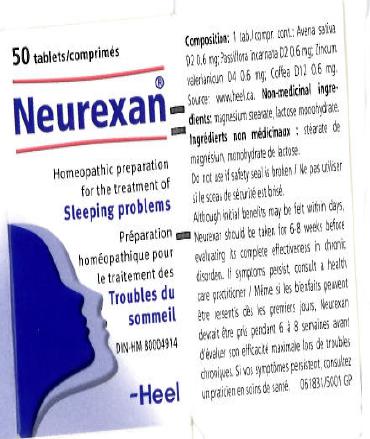
On Wednesday, October 27th, I participated in a mass suicide bid along with a handful of other Vancouver skeptics, organized through CFI Vancouver. I went to Finlandia, a naturopathic pharmacy on Broadway, to procure myself some homeopathic sleeping pills. I presented myself to the person behind the counter as a person suffering from insomnia, and curious about homeopathy (which, I would imagine, is a fairly reasonable case study). Without hesitating, the naturopath behind the counter pulled down a bottle of Neurexan, described on the bottle as a “Homeopathic preparation for the treatment of sleeping problems”.

Neurexan - homeopathic sugar pills

You’ll notice that the non-medicinal ingredients are sugar. Nothing else, just sugar. The suggested dose is 3 pills, so consuming the whole bottle would be about 16 doses of sleep meds.

As I would do with any new medication, I asked a few questions:

  1. As a larger person, sometimes I need a higher dosage. Response: It doesn’t matter if you’re 10 lbs or 1000 lbs, use the same dose.
  2. What happens if I miss the directions, or otherwise misuse the product? Response: If you miss a dose, just take a bunch extra.
  3. I’ve used sleeping pills before, and I woke up groggy. Response: Won’t happen with these.
  4. Is it possible to overdose? Response: You can’t overdose on homeopathy because it’s just energy.

If you go to a pharmacy and they tell you that the dose doesn’t matter, that you should just take a bunch extra if you miss the protocol, that there will be no adverse effects at all regardless of your previous medical experience, and that it’s impossible to overdose, make sure you haven’t stumbled into Bizarro world. Such advice from a real pharmacist would be recklessly irresponsible, which is why you get specific instructions when you buy medications.

I honestly don’t think that Jane (not her real name) was out to defraud me. I’m certain she believes that homeopathy works, as do her bosses. However, personal belief is not enough when you have someone coming in with a real medical problem. I might believe that punching you in the uterus will fix your infertility problem, but would you let me? Should you let me? Should you let your sister or wife or mother come to my uterus-punching clinic because she believes it too? No, what you’d likely do is demand some proof from me that it works – proof that you’d examine closely because of how implausible my “treatment” is.

While not the same as an uppercut to the babymaker, the bottle of pills cost me $18 – that’s some expensive sugar! On my way out of the pharmacy, I grabbed myself a copy of this little gem:

Pharma Fiction magazine

You saucy little minx – tell me how it’s the pharmaceutical companies that are defrauding me by selling me stuff that’s been shown to actually work. I’ll believe anything that you and your smoking bottle of pills tells me.

I met up with a group of CFI Vancouver skeptics in front of Vancouver General Hospital. They had all brought their own homeopathic concoctions, including a popular homeopathic flu medication, sleeping pills, arsenic pills and belladonna (the latter two being highly toxic when undiluted). All of these were available from places like Choices and Whole Foods – none of them were particularly cheap. At the appointed hour, we opened our bottles of pills and tossed back the entire thing.

To be clear, if you did this with sleeping pills that you could get as a prescription, or even over-the-counter things like Tylenol, cough medicine, antihistamines, pretty much anything you could get in a real pharmacy, you’d probably die. Even if you didn’t die, you’d be sick as a dog as the pharmaceuticals do what they do inside your body. Even if you didn’t get sick, you’d most assuredly feel something – high, woozy, drowsy, hyper, something. The most likely outcome of downing a whole bottle of sleeping pills is death.

What happened?

Nothing. Nothing happened at all. We stood around for an hour, waiting to feel something. Nothing happened.

What did we learn?

We are not the first group to perform this stunt – a group out of the UK called the 10:23 Campaign first did this on January 23, 2010 as a massive protest against Boots, a naturopathic pharmacy. Since then, the National Health Service (NHS) has called for the stoppage of funding for homeopathy with public money, doctors have petitioned the government to stop licensing homeopaths, and a great deal of light has been shone on this shadiest of practices.

Here in Vancouver, naturopaths are being given diagnostic and prescription privileges. People are flocking to places like Finlandia on the mistaken assumption that the stuff in the bottle does what it says. Homeopaths are banking on a combination of the scientific ignorance of the populace and the veneer of respectibility that accompanies being called a “doctor” to push placebo medicine to desperate people. They compound this by railing against the pharmaceutical companies and the government health regulators, stirring up hostility against the scientific community at large. In fact as a skeptic, it is almost inevitable that you will be accused of being a “Big Pharma Shill” when you bring up the fact that most “alternative medicines” don’t actually do anything (or at least they don’t do what they claim).

The predictable response from those who endorse “alternative” or “natural” medicines is to say “what is the harm? If people think it makes them feel better, why tell them otherwise?” I’ve dealt with this question before, which is to say that the truth is important if we are going to live in a society with other people and make decisions that affect each other. In this particular case though, there is a more tangible cost. This website lists cases of people who died or were seriously injured by belief in quack medicine. Obviously no treatment is perfect, but to convince people to forgo treatment that has a chance of working because you want to sell them something that doesn’t work is tantamount to abetting involuntary suicide.

Another tired trope is that homeopathy only works on some people. It’s quite the coincidence that none of the people who have tried the overdose or who have been observed in carefully designed clinical trials are the ones who it “works” for. The whole point of a study is to control for random differences between people, so that the only difference is the treatment you’re giving them. It would have to be the mother of all coincidences that nobody in these rigorous studies, nobody in our group, and nobody in the 400+ skeptics in the 10:23 campaign felt any effect in the slightest. It would have to be coincidence if it worked – but it doesn’t. The easiest explanation is that homeopathy is just water, with no more “medicine” in it than what comes out of the tap.

We were lucky as well to have the entire thing videotaped by CBC Marketplace as part of their exposé on Boiron, the largest manufacturer of homeopathy in Canada. The episode is due to air this Friday at 8 pm, so you should check it out. I’m not sure if I got on TV or not. Hopefully our merry band of skeptics can help convince people that spending any money on homeopathy is a complete and total waste, because it doesn’t do anything.

Incidentally, I slept pretty much the exact same as I always do that night. I woke up around 3:00 in the morning, rolled over and went back to sleep.

TL/DR: Homeopathy doesn’t work either in theory or in practice. Taking an entire bottle of pills doesn’t have any effect. Homeopaths are defrauding people and giving them sugar pills instead of real medicine.

Make sure you read part two of this saga.

Like this article? Follow me on Twitter!

8 “Alternative Medicine” isn’t

  • January 4, 2011
  • by Crommunist
  • · blog · critical thinking · medicine · science · skepticism

I am not Orac (though at times I wish I had his flair and his work ethic). My involvement in medicine can be accurately described as “tangential”, at least insofar as it comes to my career. That being said, I’m interested in the decisions we make when the stakes are high, and they don’t get much higher than the life and death circumstances we find ourselves in when talking about our health. As a result, I am acutely interested in the discussion around “alternative” medicines.

Alternative medicine, of course, is a propaganda phrase used to describe “treatments” that lie outside of the accepted norms for medicine. It is applied with equal gusto to completely sensible and useful things like modifying diet and exercise; things that seem like they might work but are a little out there like acupuncture and chiropractic; and to things that don’t make any sense and are completely batshit insane like homeopathy or energy healing (although, to be sure, there are way crazier things out there). The problem with such a… shall we say… flexibile definition of “alternative”, is that when someone points out that acupuncture doesn’t work, or that “energy healing” is the same fakery that faith healers exploit, people jump on them and say that they’re against anything that is “natural”.

That’s a distortion of the skeptical position that is so outrageous that it borders on being a lie. Large mainstream science-based organizations like Health Canada and the World Health Organization whole-heartedly endorse the use of diet and exercise modification to reduce the risk of heart disease, diabetes, stroke, and any number of other chronic and acute conditions. Herbal remedies are refined and turned into powerful pharmaceuticals (Aspirin is a commonly-invoked example of such a refinement). Things like yoga, massage, and other types of relaxation therapy are often recommended to reduce stress which can underly a number of health problems. Skeptics are happy to accept something so long as it works. We don’t care if it’s “alternative” or not.

These “alternative medicines” are not alternative in any way – if they work, then they aren’t alternative, they’re just medicine. The other side of the problem is the ones that are truly “alternative” aren’t medicine! They don’t work any better than voodoo or augury or invoking ancestor’s spirits. This wouldn’t be so problematic, except that they still do cause side-effects:

Giving alternative treatments such as homeopathic remedies instead of conventional medicines to children may have deadly side-effects in rare instances, a new analysis says. Australian researchers monitored reports from pediatricians in Australia from 2001 to 2003 looking for suspected side-effects from alternative medicines like herbal treatments, vitamin supplements or naturopathic pills. They found 39 reports of side-effects including four deaths.

Real medicine is regulated, monitored for safety, and must pass through a strict certification process to reach market. Nobody would claim that the process is perfect – some real stinkers get through – but they get caught. All some quack has to do is slap the label “alternative” on her product, and she gets off scot free. This poses a real threat – herbs and supplements are biochemically active substances that have real effects in the body. The liver doesn’t care if something is “natural” or not – it still breaks it down. The metabolites of any substance that enters the body can exert real effects, particularly if they are used in conjunction with pharmaceuticals.

But what about things like reiki or homeopathy? Surely these things that exert no actual effect on the body (above the often-misunderstood placebo effect) don’t cause the liver to do anything. What possible side-effects could they cause?

The answer is that people will often forego real treatments in favour of these so-called “alternative” approaches:

In 30 cases, the issues were “probably or definitely” related to complementary medicine, and in 17 the patient was regarded as being harmed by a failure to use conventional medicine. The report says that all four deaths resulted from a failure to use conventional medicine.

One death involved an eight-month-old baby admitted to hospital “with malnutrition and septic shock following naturopathic treatment with a rice milk diet from the age of three months for ‘congestion'”. “Another death involved a 10-month-old infant who presented with septic shock following treatment with homeopathic medicines and dietary restriction for chronic eczema,” the authors say.

One child had multiple seizures after complementary and alternative medicines (CAMs) were used instead of anti-seizure drugs due to concerns about potential side effects. The fourth death was of a child who needed blood-clotting drugs but was given complementary medicine instead.

These people proceeded in defiance of medical advice to give useless products to children with real health problems. Adults do this to themselves too. It’s not because they didn’t know or weren’t told, it’s because they believed in the lie that is the phrase “alternative medicine”. I can’t put too strong a point on this: “alternative medicine” isn’t alternative, and it isn’t medicine. The stuff that works is just medicine, and the stuff that doesn’t work is nothing other than voodoo.

I have friends who are voodoo practitioners. A woman I did my undergraduate with is training to be a chiropractor (much to the face-palming chagrin of the rest of our class); two of my close companions here in Vancouver use acupuncture as part of their otherwise science-based rehabilitative toolkit; another friend is into “energy work”, whatever that means. This is not an abstract concept to me, nor should it be to you. If you buy into the idea that there is such a thing as “alternative medicine”, you’re helping contribute to the climate that puts completely decent things like healthy lifestyle factors in the same category as crystals and “psychic surgery”.

There is no “alternative medicine” – there’s just medicine and bullshit.

Like this article? Follow me on Twitter!

3 What would happen if… (evolution vs. creation)

  • December 27, 2010
  • by Crommunist
  • · blog · critical thinking · crommunism · religion · science · skepticism

I sometimes forget that not everyone gets into fights on the internet about stuff. While I’ve been observing the debate over climate change and evolution and the existence of God and alt-med pseudoscience and any other number of skeptical hot topics for a while now, I often make the faulty assumption that other people are a) as interested and b) as skeptical as I am about these things. As a result, I tend to regard people who believe in astrology, or ghosts, or biblical creation,  as being curious oddities when they are in fact, more often than not simply people who aren’t particularly experienced in skeptical inquiry.

It is for this reason that this blog has, from time to time, become a dumping ground for my handful of skeptical tools, thought experiments, critical arguments, and whatever other devices I use on a day-to-day basis when I’m trying to navigate the morass of contradictory claims that are at the heart of most of these “controversies”. Today will be another one of those.

Whenever I am confronted with a new idea or a theoretical framework, I like to ask myself the question “What would the world look like if this were true?” It’s a useful thought experiment in which you are invited to re-start the world from scratch and, while keeping all the other variables the same, imagine what the outcome would be if a certain rule were true. It’s the inverse of the usual scientific process wherein we look at the evidence in aggregate and then try to figure out what the rules are; in this thought experiment we assume the rule to be true and then imagine what the world would look like as a result.

Rule #1a: Creationism – the Earth was created by a supernatural force in (more or less) its present form about 10,000 years ago. Current geological and geographical features that appear to be due to the effect of much more than 10,000 years of time are in fact caused by a massive flood.

What would the world look like if Creationism was true?

It is entirely possible that different species were created using the same set of rules, so the existence of a single mechanism underpinning living organisms (DNA/RNA transcription) is neither ruled out or necessitated by this rule. Types of animals (called “kinds” in Creationist jargon) would not show anything but trivial similarities in terms of their underlying physiology, microbiology, genetics, since they have all been created separately and are not designed to interbreed. There would be no need for wasted or vestigial organs, since these organs would only waste energy. A consistent fossil record would exist that shows only superficial changes over time, consistent with the observed rate of change in physiology in the current time (within reasonable error bars). Species would show evidence of physical migration from a single point of of origin (in the Middle East), spreading out to their current locations, and the same types of animals would occupy ecological niches everywhere (birds are the only ones that fly, fish are the ones that swim, etc.) since there is no reason to change a working pattern. Species would not acquire new characteristics over time, since they were created perfect the first time. Floods would exhibit similar effects (albeit to a smaller degree) on geology that can be observed and extrapolated.

Rule #1b: Evolution – all existing life has a common origin, having reached its present form via a process of change due to a combination of genetic mutation and changes in environment that favors certain trait changes over others.

What would the world look like if evolution were true?

Different species would have many genetic commonalities – no species would use a completely unique process of gene replication, and similarity between different types of species would be on a gradient rather than randomly distributed. Similarities would also be seen in embryology, comparative physiology, and microbiology since they all came from a single source rather than being created different. There may (or may not) be gene sequences and organ systems that are completely useless or have trivial utility in one species, but have working analogues in other species – these would be caused when two different species diverge from a common ancestor due to environmental differences. Fossil records would show animals that are similar to a number of different species but are no longer in existence, as well as some that are still in existence (since environmental changes happen with different frequency and magnitude). Species would exist only in certain areas, while there would be no evidence of them in others, as their ancestors might have had common habitat but have left that area, went somewhere else, and adapted to the change in environment. By the same token, ecological niches would be filled by many different kinds of animals – there would be mammals that fly and birds that swim, plants that eat flies and insects that fertilize soil. Species would, if given sufficient time and divergent enough environments, gradually change and become different enough as to be considered two different species.

The last step of this process is to look at the world that exists and decide which rule best resembles our observed reality. If the rule is in conflict, there are two possible explanations: 1) the rule is false, or 2) there are other forces at work underlying reality that are not fully caught by observation, and further observation will expose them. Of course creationists are loath to accept #1, and will rush to find exceptions and “explanations” for why the rule is still valid (Ken Ham’s floating log bridges, for example). This, however, is simply back-filling – throwing up hastily-assembled assertions to prop up a preconceived conclusion rather than following the existing evidence.

I was going to do a few more examples, but I’m on vacation and I’m coming dangerously close to my 1000 word limit, so I’ll do another one of these another time.

Like this article? Follow me on Twitter!

4 Backfilling – when to ignore someone (pt 3)

  • December 20, 2010
  • by Crommunist
  • · blog · critical thinking · crommunism · religion · skepticism

Back in September I unveiled my first takedown of arguments that I see popping up in online discourse – namely, appeals to “my own research” and “common sense”. I followed that up by expressing my scorn for any assertion that begins with “I believe…”, a statement that is simply a declaration of personal preference and that has no bearing on anyone else. Today’s post continues this series, albeit with a slightly different, more subtle spin.

Have you ever noticed that your nose is the perfect size and shape to hold up a pair of glasses? Isn’t it remarkable that the placement of the ears relative to the nose support the arms of the glasses? How wonderful is the design of the face! Surely this is proof that the human face has a designer.

Of course you’re smarter than that. You know that it’s exactly the other way around – glasses were designed to fit the face. If our noses had been on our foreheads, we’ve have designed glasses to be an entirely different shape. Of course, this says absolutely nothing about the shitty “design” of the eye that makes us need glasses in the first place.

This practice of assuming the truth of your premise and then cherry-picking and distorting facts to fit that premise is a practice I call “backfilling”, although I am sure it has a real name. I use a creationist example here not because it is used exclusively by the religious, but because it is perhaps most obviously and conspicuously on display when people attempt to bully facts into a literalist biblical account of creation. To be sure, everyone (myself included) uses this tactic from time to time. The psychology behind it is pretty obvious – you believe something to be true, and when it is challenged your mind looks for a rational basis for that belief.

This is similar to appeals to “common sense” or statements of belief – we as listeners are exhorted to believe an asserted statement that strains credulity. The important difference between this tactic and the aforementioned fallacies is that at least the veneer of evidence is presented. That is, we are given something that looks like evidence, provided we don’t take too long to actually look at it critically. Sometimes this comes in the form I have presented above, where cause and effect are reversed. Other times it comes from ignoring or failing to recognize confounding factors and thus jumping to an erroneous conclusion (black people must be more prone to commit crimes – look how many of them are in jail!).

The most frustrating form of this tactic I encounter happens when people make statements and then staunchly refuse to define their terms. Not too long ago, I butted heads with one of the other authors at Canadian Atheist, who seems to have some kind of unhealthy obsession with haunting my posts and writing ridiculous nonsense. One of his favourite tactics is to make some blanket statement, and then when you ask him to define what he’s talking about, he retreats into some mushy nonsense that bears a slight resemblance to the word he’s using, albeit a definition that nobody else would agree with. Thus swimming in the water of muddy incomprehensibility, he is free to make ridiculous and unsupported statements to his heart’s content.

There is a danger in using backfilling to support an argument, namely that unless someone already agrees with your premise, your argument will fail to persuade others. It’s easy to find things that will confirm your own beliefs, but as soon as you step outside a sympathetic audience, you’ll find it increasingly difficult to convince all but the most credulous listener. This is why skepticism is such a useful tool to have – it requires someone to actually define their terms rather than just getting away with blanket nonsense and vauge “well everyone knows what X is” statements.

Because it is so tempting to use this technique in an argument you’re not prepared for, we have to be particularly wary of it when we’re talking outside our depth. Similarly, it might require us to go a bit easier on someone when they’re using it. Unless they’re like Joe and they do it on a repeated basis whilst simultaneously accusing everyone else of being ‘irrational’. Then you know you’ve found a professional idiot, and you should adjust your debate style accordingly.

Like this article? Follow me on Twitter!

6 ‘Tis the season… to shove it in their faces!

  • December 13, 2010
  • by Crommunist
  • · blog · medicine · religion · secularism · skeptivism

Cross-posted from Canadian Atheist, in direct (and repeated) violation of the unofficial policy prohibiting such things.

This one will brief, since Hemant over at Friendly Atheist has already given us all the relevant information:

The Atheism subReddit has taken up the cause to raise $42,000 for Doctors without Borders — the amount is an homage to Douglas Adams.

This is a friendly competition with the members of the Christianity subReddit, who are donating to the World Vision Clean Water Fund. Much like with Kiva, we’re crushing them with our generosity :) (I should’ve pointed out that this is hardly a fair fight because the Atheism subReddit outnumbers the Christian subReddit by a longshot. There’s waaaaay more of us. So the “competition” is all in good fun. Still, Christians are more than welcome to try to beat us :) )

As I write this, the atheists have already raised $30,000. The Christians have raised a little over $10,000.

Let’s help the atheists reach their goal (and, as a bonus, give more than the Christians).

If you’re in the U.K., you can give here.

If you’re in America (or elsewhere), you can give here.

I just gave $10. What are you donating?

Personally I think this is an awesome idea. Despite being at odds with a large segment of the atheist community with my stance toward religion, I think this is the kind of collaboration and friendly rivalry that the “accommodationists” are talking about most of the time. I’m happy to channel some of my vitriol (and one night out’s worth of cash – I donated $50) into a cause that sees real and positive results for someone else on the planet.

So atheists, put down your deep-fried baby sandwiches, click on the link, and cough up whatever dough you can spare to finally destroy Christianity once and for all! Or, get a poor kid some medicine. Whatever lifts your luggage. Christians, you can donate here.

Like this article? Follow me on Twitter!

10 Do me a favour?

  • December 7, 2010
  • by Crommunist
  • · blog · critical thinking · health · medicine · skepticism

I have heard that Ms. Tinkham has died of her cancer as of 3:30 pm PST. I am deeply saddened by this, more so because this death was, in all probability, preventable.

I enjoy blogging, I really do. However, sometimes it’s a struggle to find the inspirado to write. Since I started this for serious back in March, I’ve posted at least one new story every morning at 6 am (Vancouver time). Mondays I have reached deep into my psyche and pulled out a completely organic essay (what I’ve taken to privately referring to as my “think pieces”), and Fridays I have scoured the interwebs to find you a pithy or humorous video to entertain you.

I have yet to miss an update (I came perilously close this past Friday, but I still got it out).

I love blogging, but on those days when I just don’t feel like writing, I am spurred on by the thought that somewhere out there in the world, there is someone (maybe even a few someones) who read these things and get something from them. Maybe it’s just mindless entertainment as part of your morning routine, maybe it means something more than that; regardless, the thought of you going “where the fuck is today’s article?” is what chains my ass to the desk and gets my fingers a-typin’.

I say all this because the time has come for me to ask a favour from you. Over at Respectful Insolence, Orac has put out this plea:

I’m still perturbed that a cancer quack was able to convince a woman who had everything to live for that he could cure her of her breast cancer without surgery, chemotherapy, or radiation. I’m still perturbed at this particular cancer quack’s attitude, where he tried to claim that he didn’t know the woman who is dying, Kim Tinkham, and imply that her cancer recurred because didn’t follow his regimen carefully enough, that she had stopped living the quack’s “alkaline diet.” I thought of my mother-in-law, who died in 2009 of metastatic breast cancer, and watching her decline.

And then I thought of Oprah Winfrey and her role in what ultimately happened to Kim Tinkham.

…

Oprah needs to know what can happen when people choose quackery and woo instead of effective science-based medicine.

Because I know how hard Orac works to get his lengthy and in-depth analyses of science-based medicine and medical skepticism out there, I was happy to contribute my voice to what I hope is a chorus of people saying the same thing: people who give bad advice about medicine have to live with the consequences of their words. This Kim Tinkham woman was told that cancer was an “acid” that was caused by feelings of resentment – a steamier pile of bullshit there has never been. Based on this faulty premise, the exposure and publicity that she got on the Oprah show, and Oprah’s whole-hearted endorsement of nonsense like The Secret, Ms. Tinkham eschewed conventional treatment and attempted to “alkalize” her body to get rid of cancer.

To be sure, with a stage III cancer she had roughly 50% odds of succumbing to the disease even with conventional treatment. However, that is a full 50% better chance than if she just slowly lets the cancer kill her. If we found some other treatment that improved your odds of surviving cancer by 50%, we’d be trumpeting it from the skies. Ms. Tinkham, with encouragement from Oprah, decided to opt instead for witch-doctor treatment from a quack who thinks that cancer is made up of acid. I have, with my own two eyes, seen a cancerous tumour – it looks nothing at all like acid. Furthermore, I have seen positive, happy, well-balanced people die of cancer – to suggest that it’s their own fault for having too much “resentment” is a disgusting insult to anyone who has seen a loved one die of cancer.

And so I am asking you, my dear readers, for whom I work so hard to provide regular (and hopefully interesting) content 5 days a week, to do me this favour: please write in to the Oprah show and tell them that it’s not okay to encourage vulnerable sick people to slowly commit suicide under the “care” of people who would exploit them first, then blame them later when their voodoo “cures” don’t work.

Please also feel free to copy and paste your submission to Oprah in the comments section.

Like this article? Write in to the Oprah Show then, dammit!

P.S. WordPress helpfully tracks the number of clicks the links that I post yield, so if you read this and don’t write the show, I’ll know.

Page 13 of 16
  • 1
  • …
  • 11
  • 12
  • 13
  • 14
  • 15
  • 16

  • SoundCloud
  • Twitter
  • Facebook
  • YouTube
  • Subscribe Subscribed
    • Crommunist
    • Join 82 other subscribers
    • Already have a WordPress.com account? Log in now.
    • Crommunist
    • Subscribe Subscribed
    • Sign up
    • Log in
    • Report this content
    • View site in Reader
    • Manage subscriptions
    • Collapse this bar
 

Loading Comments...