Crommunist
  • Blog
  • Music
    • Video
    • Audio
  • Media
    • Audio
    • Video
  • Events
  • Twitter
  • Ian Cromwell Music
  • Soundcloud

Category: science

3 “Liberation Therapy” saga continues

  • April 19, 2011
  • by Crommunist
  • · blog · Canada · health · medicine · news · science

A while back, near the beginning of this blog, I brought to your attention a new potential treatment for Multiple Sclerosis – a severe degenerative disease. The treatment, pioneered by an Italian doctor by the name of Zamboni (I couldn’t make this stuff up – I’m not that creative), is referred to as ‘liberation therapy’, and involves using venous angioplasty (balloons) to clear blockages.

I expressed my skepticism about this procedure at the time, saying that I generally doubted the claim, simply because there’s little connection between the circulatory and nervous systems. It seemed improbable to me, but I was happy (and encouraged others) to wait and see what the evidence says – what happens when we observe patients under controlled circumstances with adequate followup?

Well, it seems that this happens:

People with multiple sclerosis may show blocked neck veins as a result of the disease rather than as a cause, a large study published Wednesday suggests. The findings cast doubt on the theory that blocked or narrowed veins are a main cause of MS, study author Dr. Robert Zivadinov of the University of Buffalo said. The findings published in the journal Neurology were consistent with thinking that the condition — also known as chronic cerebrospinal venous insufficiency, or CCSVI — is more common in patients with multiple sclerosis but not to the degree first reported by Italian doctor Paolo Zamboni.

Please don’t mistake me – I get little pleasure from being right in this case. People close to my family have lived with MS, and I would much rather be wrong if it meant that people could undergo a simple medical procedure and achieve relief from their symptoms. However, the facts are the facts. In this case, the facts do not support the claim that blocked veins contribute to MS, and there is consequently no reason to suspect that alleviating the blockages will have any effect on MS patients.

This study is, perhaps, not the definitive ‘smoking gun’ that liberation therapy is not effective, but it certainly does cast doubt on the original hypothesis of its efficacy. One of the chief components of the scientific method’s accuracy is the ability to reproduce results in a variety of locations. If some event only occurred once, and cannot be observed by others performing the same procedures as elicited the original event, then serious doubt is cast on the original observation. It is far more likely, in a case like this, that there was some flaw in the original observation. This is a good thing – it prevents us from making decisions based on bad information.

However, sometimes we are hell-bent on making those decisions no matter what the evidence says:

The New Brunswick government says it will still help multiple sclerosis patients gain access to therapy to open narrowed neck veins, even though a new report on the procedure is raising concerns. New Brunswick Health Minister Madeleine Dube said that could be debated in the medical community for some time. “But while this is being researched and debated, those people still need support and we are committed to that,” she said Thursday.

There is nothing strictly incorrect about Minister Dube’s statement; however, she and I do seem to have a disagreement over what the word ‘support’ means. Under my definition, it means giving sick people the best care possible, guided by scientific evidence and good practice. Under her definition, it means giving patients whatever they ask for to make them feel better. While I am all for making people feel better, I do not subscribe to the philosophy that cutting people open to elicit the placebo effect constitutes responsible medical care.

For all intents and purposes, there is no reason to suspect that liberation therapy elicits anything stronger than a placebo effect. For every anecdote that states an improvement in symptoms, there is one that talks about how the symptom relief has faded over time. And among those anecdotes, there’s more from people who keep chasing the bad medicine like an addict fiending for a fix:

The monitoring is for Canadians such as Caroline McNeill of Langley, B.C., who travelled to California to have her neck veins reopened using balloon angioplasty. She has had the procedure twice before, and noted lingering benefits such as feeling less tired. “The numbness on my fingers has started to come back again, and I have really bad dizziness and vertigo,” McNeill told her doctor. She plans to return to Newport Beach in Southern California for a stent later this month.

It doesn’t surprise or confound me in the slightest that people who experience a temporary benefit would go back to the well, so to speak, and give the therapy another try. When the current regimen of therapies are only partially effective and carry a whole host of adverse effects, it’s completely reasonable to leap at any alternative. This is why these ‘alternative therapies’ (which is a really stupid name) are so dangerous – they make wild promises that offer benefits that have no scientific backing whatsoever. The people to whom these promises are made are often desperate for any relief, and will try just about anything no matter how dangerous it is.

This is why people who advocate “health freedom” make me so angry – there is no way you can expect people to be dispassionate and conscientious consumers, weighing the plusses and minuses of different options, when the stakes are so high. People’s lives and day-to-day well-being hang in the balance, and they’ll jump at any chance to feel better. This is why our policy should be based on scientific evidence, not the whims of politicians and the desperation of sick people.

Like this article? Follow me on Twitter!
0 There’s no justice, there’s just us

  • April 11, 2011
  • by Crommunist
  • · blog · critical thinking · crommunism · liberalism · psychology

There is a concept in psychology called the “just world hypothesis”, also known as the “just world fallacy”. In its essence, this concept refers to our tendency to infer that the world operates as it should – goodness is rewarded and iniquity is punished. Where the fallacious component of this phenomenon crops up is when we allow this thought process to operate in reverse – those who are punished or rewarded must have deserved it, because the world just works that way.

This is a particularly attractive heuristic for a number of reasons. First, it is reassuring to think that we live in a universe where things exist in a state of balance – chaos is unsettling and potentially dangerous. Second, and perhaps most compellingly, it gives us a sense of satisfaction to think that the hard work we put in will be rewarded. It gives us even more satisfaction to think that those who do wrong will get their come-uppance in the end, a phenomenon called schadenfreude.

There is no place in which the just world fallacy is more obvious than in theology. Regardless of which deity we are talking about, there is always a balance between the forces of good and the forces of evil, with the good guys eventually winning out in the end. Christianity falls down this path most egregiously, with an accounting of a final battle and judgment that is the stuff of great myth; however, all the great religious traditions put great faith in the idea of ultimate balance. The very concept of an afterlife is an implicit reward for a good life or punishment for a life used for ill.

This fallacy pops up outside the realm of religion, however. It is this fallacy that allows us to look at the horrendous disparity between the living conditions of First Nations people, of women, of people living in starvation in southeast Asia and Africa, and rationalize it. Take a look at the comments section of any news report from that region (particularly about what is currently happening in the Ivory Coast), and you’ll undoubtedly come across someone with a brilliant statement like “well all of those African leaders are corrupt – what do they expect?”

It’s nice to be able to explain away injustice with such a simple wave of the hand. Doing so removes any sense of responsibility you might feel for the way corporations from which we purchase goods exploit and devastate those countries, destabilizing them to a point where corruption becomes de rigeur. It removes any feelings of guilt for the fact that our cities are built on First Nations land, much of which was obtained through dishonest treaty processes. It prevents us from having to feel remorse for propping up a misogynistic system that rewards men for fictitious “superiorities” that we have been told to believe we have. We can then go about our lives without having to constantly examine our every thought and assumption, which is an exhausting process that can prevent anything from actually getting accomplished.

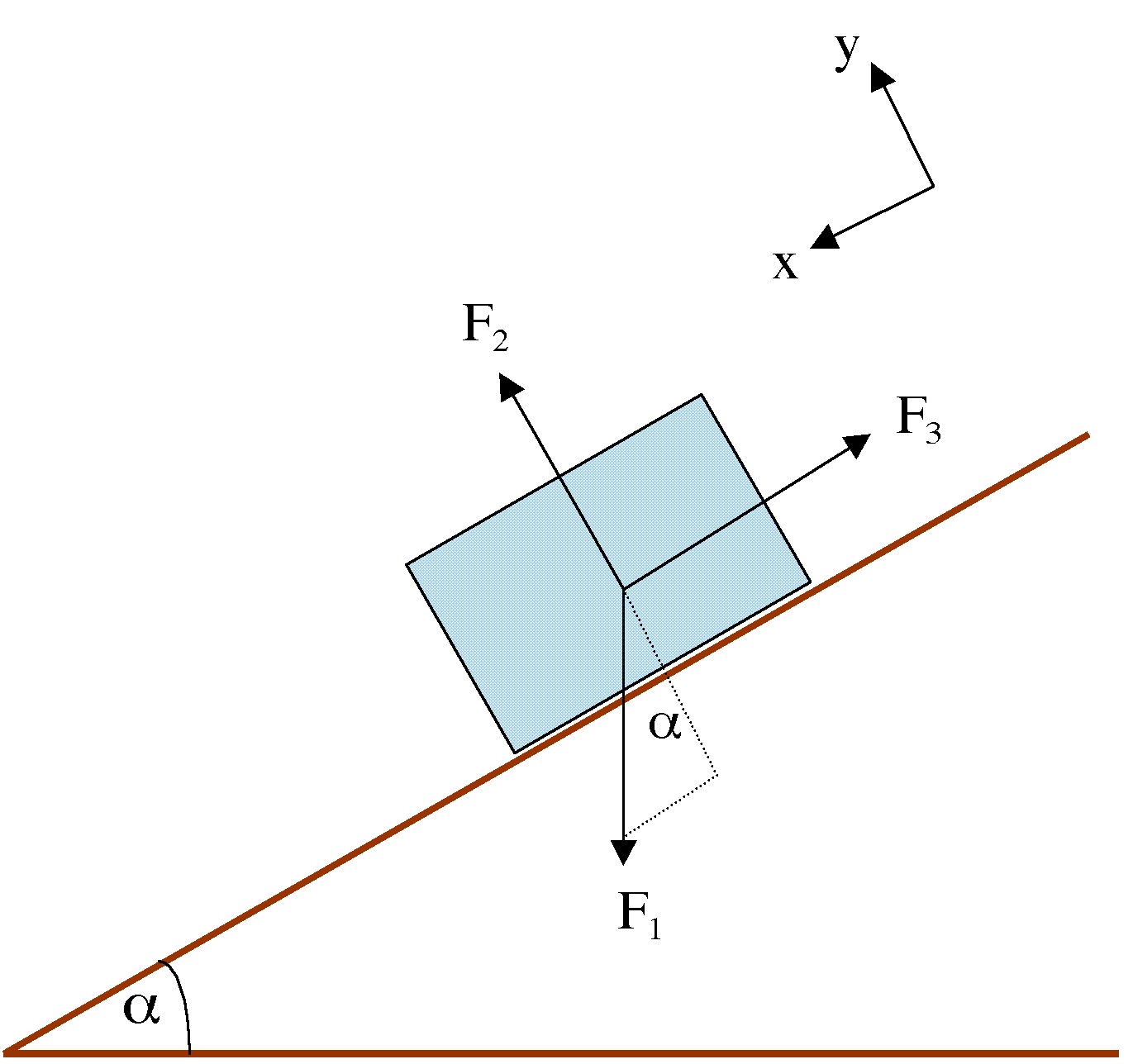
The problem with belief in the just world hypothesis is that it blinds us from seeing the world as it truly is. Consider this figure for a moment:

Anyone who has studied classical mechanics (called ‘physics’ in high school) will immediately recognize this as a free body diagram. The various forces at work on the rectangular object are presented. When we can identify the direction and magnitude of these forces, we can make meaningful predictions about the behaviour of the object. However, if we neglect one of the forces either in how strong it is or where it’s going, our predictions – indeed, our very understanding of the object – are fundamentally flawed (e.g., if we forget about friction, we would expect the block to slide down the ramp – friction may keep it exactly where it is).

Society and the people of which it is comprised can be thought of in much the same way. When we neglect to take into account the forces that are at work on us, our predictions and understanding of the world is meaningfully misconstrued. If we add in other forces that aren’t actually there, then we’re realy in trouble. The just world fallacy is just such an addition – it postulates the existence of an outside influence that inherently balances other forces that may result in unjust disparity. We are then relieved from any sense of responsibility to correct injustices.

The ultimate manifestation of this is the bromide “everything happens for a reason”. Starving kids in Ethiopia? Illegal wars? Abuse and deprivation? Exploitation of vulnerable peoples? Don’t worry, everything happens for a reason. Justice will win out in the end, without any need for action from you, safe behind your wall of fallacy.

It’s not exactly difficult to see why this view of the world is fundamentally dangerous. The world is not a fair place. In fact, “fairness” is an essentially human construction – sometimes animals are predated into extinction, sometimes entire ecosystems are destroyed by natural disasters, it’s entirely possible that entire planetary civilizations were wiped out by a supernova in some far-flung corner of the galaxy. These things are only “unfair” to human eyes – as far as the universe is concerned, them’s the breaks. I suppose there is some truth to the statement that “everything happens for a reason” – it’s just that this reason is that we live in a random, uncaring universe.

If we wish to live in a fair world – and I’d like to hope that we do – then it is incumbent upon us to make it that way. The only force for justice that exists is in the hands of human beings, and the only strength behind that force is the level of responsibility we feel to make it so. It is of no use to cluck our tongues and say “well that’s the way it goes” or “things will work out” – making statements like that is the same as saying “I don’t care about the suffering of those people”. If that’s the case (and oftentimes it is), we should at least be honest with ourselves and say it outright.

It is for this reason that I identify as a liberal – I am not content to let the universe sort things out. The universe doesn’t care, and there’s no reason to believe that the unfairness of random chance will result in justice for those that centuries of neglect have left behind. If we care about justice, then it’s up to us to make it happen.

Like this article? Follow me on Twitter!

TL/DR: The world is not a fair place, although we like to try and convince ourselves that it is. If we want to live in a fair world, then we have to make it that way.

2 Psychology beats “bootstraps”

  • March 30, 2011
  • by Crommunist
  • · blog · conservativism · critical thinking · privilege · psychology · science

Crommunist is back from vacation, at least physically. I will be returning to full blogging strength by next week. I appreciate your patience with my travel hangover.

Here’s a cool thing:

You don’t have to look far for instances of people lying to themselves. Whether it’s a drug-addled actor or an almost-toppled dictator, some people seem to have an endless capacity for rationalising what they did, no matter how questionable. We might imagine that these people really know that they’re deceiving themselves, and that their words are mere bravado. But Zoe Chance from Harvard Business School thinks otherwise.

Using experiments where people could cheat on a test, Chance has found that cheaters not only deceive themselves, but are largely oblivious to their own lies.

Psychology is a very interesting field. If I wasn’t chasing the get-rich-quick world of health services research, I would have probably gone into psychology. One of the basic axioms of psychology, particularly social psychology, is that self-report and self-analysis is a particularly terrible method of gaining insight into human behaviour. People cannot be relied upon to accurately gauge their motivations for engaging in a given activity – not because we are liars, but because we genuinely don’t know.

Our consciousness exists in a constant state of being in the present, but making evaluations of the past and attempting to predict the future. As a result, we search for explanations for things that we’ve done, and use those to chart what we’d do in the future. However, as careful study has indicated, the circumstances under which we find ourselves is far and away a more reliable predictor of how we react to given stimuli than is our own self-assessment. This isn’t merely a liberal culture of victimhood, or some kind of partisan way of blaming the rich for the problems of the poor – it is the logical interpretation of the best available evidence that we have.

Part of the seeming magic of this reality of human consciousness is the fact that when we cheat, we are instantaneously able to explain it away as due to our own skill. Not only can we explain it away, but we instantly believe it too. A more general way of referring to this phenomenon is internal and external attribution – if something good happens it is because of something we did; conversely, bad things that happen are due to misfortune, or a crummy roll of the dice. When seen in others, this kind of attitude is rank hypocrisy. When seen in ourselves, it is due to everyone else misunderstanding us. This is, of course, entirely normal – everyone would like to believe the best about themselves, and our minds will do what they can to preserve that belief.

The researchers in this study explored a specific type of self-deception – the phenomenon of cheating. They were able to show that even when there was monetary incentive to be honest about one’s performance and cheating, people preferred to believe their own lies than to be honest self-assessors. However, the final result tickled me in ways that I can only describe as indecent:

This final result could not be more important. Cheaters convince themselves that they succeed because of their own skill, and if other people agree, their capacity for conning themselves increases.

There is a pervasive lie in our political discourse that people who enjoy monetary and societal privilege do so because of their own hard work and superior virtue. This type of thinking is typified by the expression “pulled up by her/his bootstraps” – that rich people applied themselves and worked hard to get where they are. The implication is that anyone who isn’t rich, or who has the galling indecency to be poor, is where they are because of their own laziness and nothing more. It does not seem to me to be far-fetched at all that these people are operating under the same misapprehension that plagued the study’s participants – they succeed by means that are not necessarily due to their own hard work, and then back-fill an explanation that casts themselves in the best possible light.

Please do not interpret this as me suggesting that everyone who is rich got their by illegitimate means. If we ignore for a moment anyone who was born into wealth, there are a number of people who worked their asses off to achieve financial success – my own father is a mild example of that (although he is not rich by any reasonable measure). However, there are a number of others who did step on others, or use less-than-admirable means to accumulate their wealth. However, they are likely to provide the same “up by my bootstraps” narrative that people who genuinely did build their own wealth would, and they’ll believe it too! When surrounded by others who believe the same lie, it becomes a self-sustaining ‘truth’ that only occasionally resembles reality.

The problem with this form of thinking is that it does motivate not only attitudes but our behaviours as well. It becomes trivial to demonize poor people as leeches living off the state, and cut funding for social assistance programs as a result. People who live off social assistance programs often believe this lie too, considering themselves (in the words of John Steinbeck) to be “temporarily embarrassed millionaires” who will be rich soon because of their furious bootstrap tugging. While it is an attractive lie, it is still a lie that underlies most conservative philosophy – which isn’t to say that liberals aren’t susceptible to the same cognitive problems; we just behave in a way that is more consistent with reality, so it doesn’t show as much.

Like this article? Follow me on Twitter!
2 Conservative Party of Canada is against science

  • March 17, 2011
  • by Crommunist
  • · blog · Canada · conservativism · critical thinking · politics · science

There is a surefire way to ensure tyranny – undermine the education of the populace. When the people don’t have the tools required to determine truth from lies or to obtain their information from a variety of sources, they become dependent on the state to tell them “the Truth™”. We can see this currently happening in the Arab world, where state television in Libya is still being used to broadcast misinformation that is (perhaps fatally) undermining the cause of the pro-democracy rebellion.

One way to ensure a religious tyranny is to ensure that the populace doesn’t have access to adequate scientific information. Science is inherently hostile to religion, since the two are very different methods at arriving at answers. The scientific method involves testing repeated observations and inferring rules and laws from trends within those observations. The religious method involves arriving at a conclusion and then finding observations that support the a priori position. The problem with the latter method is that it is trivially easy to arrive at false conclusions and then justify them afterward. By ensuring that the public doesn’t have access to scientific knowledge, you can erode the cause of science and replace it with whatever system you like.

Enter the Conservative Party of Canada:

The public has lost free online access to more than a dozen Canadian science journals as a result of the privatization of the National Research Council’s government-owned publishing arm. Scientists, businesses, consultants, political aides and other people who want to read about new scientific discoveries in the 17 journals published by National Research Council Research Press now either have to pay $10 per article or get access through an institution that has an annual subscription.

Now this on its own is an incredibly minor development. The vast majority of people who access the scientific literature are scientists working at institutions that can afford to buy subscriptions. Furthermore, the lay public get most of their scientific information from people who interpret the studies that are now behind a paywall, so most people won’t notice the difference. This is not the straw that breaks the camel’s back by any stretch of the imagination.

However, erosion doesn’t work in giant leaps – it occurs gradually over time. One of the strengths of science is the ability of anyone who is curious to go back and investigate the source material. Someone tells you that a drug works to treat diabetes, you can go to the paper and check it for yourself. Someone tells you that homeopathy cures warts, you can go check it out for yourself. Someone tells you that the universe was created in the Big Bang, you can go read the papers. This process encourages skepticism and critical thinking, while increasing the trust that the public has in the scientific community (by increasing transparency).

By placing additional barriers between lay Canadians and the products of Canadian scientific researchers, the privatization of the National Research Council is inherently anti-transparent and anti-science. It discourages scientific scrutiny and question-asking, which are two things that the CPC really doesn’t like in the first place. If Harper can’t get a majority right now, at least he can do as much damage as possible with the limited powers he wields.

Like this article? Follow me on Twitter!

0 Bonus movie: Science smackdown!

  • March 11, 2011
  • by Crommunist
  • · blog · conservativism · funny · movie · science

This was too good to let go

Sadly, the people for whom this kind of speech is most needed are too stupid to understand all the big words that Rep. Markey used:

“Mr. Chairman, I rise in opposition to a bill that overturns the scientific finding that pollution is harming our people and our planet.

However, I won’t physically rise, because I’m worried that Republicans will overturn the law of gravity, sending us floating about the room.

I won’t call for the sunlight of additional hearings, for fear that Republicans might excommunicate the finding that the Earth revolves around the sun.

Instead, I’ll embody Newton’s third law of motion and be an equal and opposing force against this attack on science and on laws that will reduce America’s importation of foreign oil.

This bill will live in the House while simultaneously being dead in the Senate. It will be a legislative Schrodinger’s cat killed by the quantum mechanics of the legislative process!

Arbitrary rejection of scientific fact will not cause us to rise from our seats today. But with this bill, pollution levels will rise. Oil imports will rise. Temperatures will rise.

And with that, I yield back the balance of my time. That is, unless a rejection of Einstein’s Special Theory of Relativity is somewhere in the chair’s amendment pile.

Science: making Conservatives wrong since the 1500s.

Like this article? Follow me on Twitter!

4 Alternative therapies aren’t ALWAYS full of shit… but this one is

  • February 1, 2011
  • by Crommunist
  • · blog · Canada · health · medicine · science · skepticism

It seems that once again I am donning my ‘scientist’ cap and wading knee-deep into the shit…

Literally:

A hospital physician from a major B.C. facility says several patients died in the last year from C. difficile — unnecessarily — after the health authority stopped her and her colleagues from giving an experimental, simple and highly effective treatment… The treatment, called a fecal transplant, involves introducing stool from a healthy donor — usually a relative — into an infected patient’s bowel, usually through an enema.

Yes, you read that correctly. Dr. Jeanne Keegan-Henry is proposing transplanting somebody’s poo into the bowels of someone with a Clostridium difficile infection in order to cure them.

Poo.

Transplant.

Poo Transplant.

It sounds like the name of a doomed-to-obscurity high school punk rock band. And yet, Dr. Keegan-Henry, who is by all accounts an able and qualified physician, is recommending it. Skeptical smackdown time, right?

Here’s the crazy thing about skepticism. Detractors would characterize it as being resolutely opposed to anything that doesn’t sound like Big Pharma drugs, or is too experimental or outside the realm of conventional medicine. While it is often worthwhile to listen to the criticisms that come from one’s enemies, it is important to resist the temptation to allow them to define your position. More often than not, they are all too happy to succumb to the temptation of straw-manning you into oblivion rather than give a dispassionate description of what it is you actually think (cue the peanut gallery coming out of the woodwork to point out the many times I’ve done it to them).

Skepticism is about evaluating claims, all claims, according to their plausibility and the evidence supporting their truth. When I first caught wind of poo transplants (reader’s note: this article will be stuffed full of poop jokes – you have been warned) my skeptic hackles immediately went up. It’s really the prototypical case – we have a brave maverick doctor who is standing up to the medical establishment and recommending a completely natural remedy to a condition that is usually treated with drugs. For bonus points, it involves enemas. Seems like this ripe stinker was dumped right on our plate as another crazy whackaloon looking for attention (and possibly a book deal).

So, what does a skeptic do? She goes to the evidence! A quick search on PubMed (the U.S. National Library of Medicine National Institutes of Health centralized research database) for “fecal transplant clostridium difficile” reveals 30 hits – not exactly a stellar start; usually it’s in the neighbourhood of a few hundred to a few thousand results. The majority of these hits were commentaries and letters rather than full-blown research articles – also not a good start; what we’re looking for is systematic reviews of clinical trials, or at least trials themselves. We don’t have that – what we have is a handful of case series reports, each representing a tiny number of patients.

So I took a look at the largest case series, that of a 12-patient sample. And the results? Well… would you forgive me if I say “holy shit”?

Click to enlarge

Of 12 patients with infections ranging from 79 to 1532 days (mean length = 352 days), 100% of the patients in this sample experienced a clinical response, defined as “cessation of diarrhea, cramps, and fever within 3 to 5 days”. The authors describe their inclusion and exclusion criteria clearly, as well as the treatment protocol. Patient followup ranged from 3 weeks to many years after the intervention (which is a necessary evil of a case series – it’s not a prospective trial where follow-up can be standardized).

So, cut and dry answer right? Obviously it worked for these patients! No need for further study – let’s approve the shit!

Not so fast…

The reason for putting on the brakes (and possibly leaving skid marks) is that this is one sample of patients. These results are certainly dramatic, but there were no enterobacteriology cultures done – the gut was not examined to see if it was truly the poop that did the trick. The patients from whom the samples were taken had taken doses of antibiotics before donating their sample – was it the poo or the drugs that done it? Even the authors of the paper admit that they don’t have a certain mechanism by which fecal transplantation works. There are certainly some plausible attempts at explanation, but they still don’t know.There was also no control group for comparison (although in a time-series design it is permissible to use the patients as their own controls, comparing them to their pre-trial state – I am channeling that degree in epidemiology!), meaning that we cannot rule out the placebo effect or some other event as explanatory.

Is Dr. Keegan-Henry right? Should we be allowing fecal transplanation? Maybe – the preliminary results are certainly compelling (to go from years of suffering to resolved in 3-5 days is really remarkable). We should be enrolling people in small-scale clinical trials to test for efficacy. Given that there are no observed adverse effects of the transplantation, there’s certainly no reason to block the investigation:

Dr. George Sing, a gastroenterologist at Burnaby Hospital, also wants to provide the treatment to patients. “We did table [a proposal], but it fell into the cracks,” said Sing. “We have been through all the channels … but when it goes through committees it gets bogged down.”

Heh… he said “fell into the cracks”.

This is the hallmark of skepticism – even if something looks totally batshit insane, we test claims against evidence, not against what we think should work. I’ll be interested to see if this story develops.

Like this article? Follow me on Twitter!

4 Quick refutations to common homeopath complaints

  • January 17, 2011
  • by Crommunist
  • · blog · critical thinking · crommunism · science · skepticism

At the time of writing, the CBC Marketplace piece on homeopathy (in which yours truly makes an appearance) has not yet aired. However, there are already in excess of 100 comments on the 30-second trailer. Part of this is an intentional campaign by homeopaths to troll the comments section and make it look as though CBC’s reporting is reviled by a representative cross-section of Canadians – I’d be inclined to think that most Canadians haven’t even heard of homeopathy let alone tried it. There are, most probably, at least some people who are commenting because they honestly believe in homeopathy, but I’d suspect they’re in the minority.

Of course homeopaths are indeed going bat-shit insane and decrying the Marketplace piece as “one sided and unfair” (again, remember that it hasn’t aired yet) and accusing the lot of us of being sponsored by the pharmaceutical companies (which is such a tiresome lie that I almost don’t want to bother pointing out how untrue it is). For the record – I have received zero pharmaceutical money. My salary is paid by a number of grants, some of which are pharmaceutical. However, my personal income does not change, and would not change from any kind of skeptical involvement. The people who pay my salary (the provincial regulatory body for health services) have no idea what I do outside of work, and my salary is based on a fixed schedule that is common for everyone who has my job title and experience within the organization. I have worked on exactly one pharmaceutically-related project to date, and have had zero direct contact with the funders, who (incidentally) don’t know what my findings are yet; findings that have been presented at public conferences over which the companies exerted zero control.

Rather than going to the trouble of responding to the flood of comments, I will avoid fighting the tide of stupid and respond to the claims generally:

… Continue Reading

6 No refund policy? No, refund policy!

  • January 10, 2011
  • by Crommunist
  • · blog · medicine · science · skepticism · skeptivism

This is the second part of this morning’s story of my homeopathic overdose.

After the “overdose” failed to accomplish anything, I went back to Finlandia and told the person behind the till that I was dissatisfied with the insomnia homeopathic preparation I had purchased, because it didn’t do anything. I told her that it had not changed my sleeping pattern whatsoever, and that as far as I could tell it didn’t work. She went and got the manager, who informed me that there was no refund policy on homeopathy. Peeved, I started to walk out. She stopped me and said that she might be able to do an exchange, although that was against policy too.

The reason for the policy, she told me, was that homeopathy doesn’t work right away. If I was looking for a “quick fix” I should try something else, but that homeopathy supposedly “regulates” my sleeping cycle. I pointed out that it hadn’t done anything like that, even after taking an entire bottle. She suggested that I needed to give it more time and keep going. I said that I was warned about that, and that I wasn’t interested in buying more of a product that didn’t work the first time.

As she ushered me over to the counter of sleeping stuff, she introduced me to the devil herself – the Heel Homeopathy rep. I described my issue to her and she gave me a bunch of the same nonsense about how it was working to ‘balance my energy’ and that I would need to wait for at least a week to see any effect. There was a guy behind the counter who said “it takes time, and homeopathy doesn’t work for everyone” (that old gem). I pointed out that when I came in, I told them I was having a sleeping problem, they gave me something they told me would help – at no point did anyone say “this will help in a week’s time” or “this might not work for you”. I was just told to follow the instructions. There is a difference here between things like antidepressants that actually do take a while to take effect – this information is disclosed to you when they are prescribed. These scam artists had told me no such thing at the point of purchase, and were then trying to evade having to pay me back when their snake oil didn’t work.

The assistant manager quickly swept me away from my debunking, and back to the sleeping pill counter. She then tried to up-sell me a bunch of stuff. The one she pushed the hardest was $44 a bottle! I put on my best skeptical face and said “look, I’m a scientist. I know a thing or two about how the body works, and none of what you’ve said so far addresses my problem.” Sensing defeat, she then buckled and refunded my money in full. Of course, on my way out she tried to sell me a bunch of other stuff, and told me to “do my own research”. Silly manager, I’ve done LOTS of research – you’re full of crap.

I do kind of feel bad about taking the refund under false pretenses, after buying the product under OTHER false pretenses. However, since it was PRESCRIBED under false pretenses, and the people who provide this stuff really ought to know better than to make false health claims, I will sleep just fine tonight (*rimshot*). I will donate the $18 to the James Randi Educational Foundation.

Like this article? Follow me on Twitter!

11 My homeopathic overdose

  • January 10, 2011
  • by Crommunist
  • · blog · critical thinking · medicine · science · skeptivism

If you’re reading this, then I survived a deadly overdose on sleeping pills. It wasn’t my iron constitution, survival instincts or even the quick work of trained medical professionals that saved my life; no, it was the fact that I used homeopathic sleeping pills.

Many of you have probably heard of homeopathy, but don’t really know much about it – this is how they make money. Like Scientology, the explanation is so stupid that once you know about it you can’t believe anyone buys into it. Basically, homeopathy operates on the principle that “like cures like” – for example, an herb that causes fever symptoms is a good cure for fever. The secret is that the substance must be super dilute, and the more diluted it is, the stronger it becomes. Avogadro’s constant (6.02 x 10^23) describes the number of molecules present in a mole of the substance in question – there are, for example 6.02 x 10^23 molecules of O2 in 38 grams of oxygen gas. What this means is that if you dilute something past 23C (C is a number which denotes the number of 100X dilutions a substance has undergone), there is essentially zero chance of even one molecule of active substance being present in the “remedy”.

Many homeopathic drugs are diluted to 30, 100, even 1000C – a sphere of water the size of the entire universe wouldn’t even contain one molecule of the substance. Homeopaths counter this by saying that water has “memory”, and can “remember” what was diluted in it. How it distinguishes between the herbs you want and the thousands of animals that have peed in it, the rocks it has passed over, and the other homeopathic remedies that have been in the same water (more dilute, therefore much stronger) is a question for which an answer has never even been attempted.

For a better explanation of how homeopathy works, go to this website: http://www.howdoeshomeopathywork.com/

It’s no exaggeration to say that homeopathy is completely useless. It couldn’t possibly work without re-writing the entire understanding of chemistry and physics, developed over hundreds of years. Even still, it has been tested – it doesn’t work. While a handful of “studies” (no control group, no proper blinding, small sample size) have shown a small effect for homeopathy – an effect that is much smaller than the claims that are made by homeopaths – every single rigorously-controlled study has shown it to be no different than a placebo. You could give someone a glass of water, tell them it’s homeopathic, and get the exact same result as if you put a drop of onion juice in it then diluted it a billion times.

However, despite the fact that it can’t work, and that it doesn’t work, people still buy into homeopathy in a big way. Walking the streets of Vancouver, it’s easy to stumble across a “natural” pharmacy that sells herbs, vitamins, and of course homeopathic preparations. Homeopathy is a multi-billion dollar industry – essentially the largest legal scam ever perpetrated (aside from, perhaps, religion) – separating desperate people from their money one vial of water or bottle of sugar pills at a time.

What did I do?

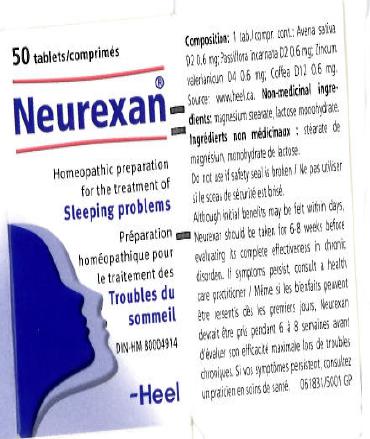
On Wednesday, October 27th, I participated in a mass suicide bid along with a handful of other Vancouver skeptics, organized through CFI Vancouver. I went to Finlandia, a naturopathic pharmacy on Broadway, to procure myself some homeopathic sleeping pills. I presented myself to the person behind the counter as a person suffering from insomnia, and curious about homeopathy (which, I would imagine, is a fairly reasonable case study). Without hesitating, the naturopath behind the counter pulled down a bottle of Neurexan, described on the bottle as a “Homeopathic preparation for the treatment of sleeping problems”.

Neurexan - homeopathic sugar pills

You’ll notice that the non-medicinal ingredients are sugar. Nothing else, just sugar. The suggested dose is 3 pills, so consuming the whole bottle would be about 16 doses of sleep meds.

As I would do with any new medication, I asked a few questions:

  1. As a larger person, sometimes I need a higher dosage. Response: It doesn’t matter if you’re 10 lbs or 1000 lbs, use the same dose.
  2. What happens if I miss the directions, or otherwise misuse the product? Response: If you miss a dose, just take a bunch extra.
  3. I’ve used sleeping pills before, and I woke up groggy. Response: Won’t happen with these.
  4. Is it possible to overdose? Response: You can’t overdose on homeopathy because it’s just energy.

If you go to a pharmacy and they tell you that the dose doesn’t matter, that you should just take a bunch extra if you miss the protocol, that there will be no adverse effects at all regardless of your previous medical experience, and that it’s impossible to overdose, make sure you haven’t stumbled into Bizarro world. Such advice from a real pharmacist would be recklessly irresponsible, which is why you get specific instructions when you buy medications.

I honestly don’t think that Jane (not her real name) was out to defraud me. I’m certain she believes that homeopathy works, as do her bosses. However, personal belief is not enough when you have someone coming in with a real medical problem. I might believe that punching you in the uterus will fix your infertility problem, but would you let me? Should you let me? Should you let your sister or wife or mother come to my uterus-punching clinic because she believes it too? No, what you’d likely do is demand some proof from me that it works – proof that you’d examine closely because of how implausible my “treatment” is.

While not the same as an uppercut to the babymaker, the bottle of pills cost me $18 – that’s some expensive sugar! On my way out of the pharmacy, I grabbed myself a copy of this little gem:

Pharma Fiction magazine

You saucy little minx – tell me how it’s the pharmaceutical companies that are defrauding me by selling me stuff that’s been shown to actually work. I’ll believe anything that you and your smoking bottle of pills tells me.

I met up with a group of CFI Vancouver skeptics in front of Vancouver General Hospital. They had all brought their own homeopathic concoctions, including a popular homeopathic flu medication, sleeping pills, arsenic pills and belladonna (the latter two being highly toxic when undiluted). All of these were available from places like Choices and Whole Foods – none of them were particularly cheap. At the appointed hour, we opened our bottles of pills and tossed back the entire thing.

To be clear, if you did this with sleeping pills that you could get as a prescription, or even over-the-counter things like Tylenol, cough medicine, antihistamines, pretty much anything you could get in a real pharmacy, you’d probably die. Even if you didn’t die, you’d be sick as a dog as the pharmaceuticals do what they do inside your body. Even if you didn’t get sick, you’d most assuredly feel something – high, woozy, drowsy, hyper, something. The most likely outcome of downing a whole bottle of sleeping pills is death.

What happened?

Nothing. Nothing happened at all. We stood around for an hour, waiting to feel something. Nothing happened.

What did we learn?

We are not the first group to perform this stunt – a group out of the UK called the 10:23 Campaign first did this on January 23, 2010 as a massive protest against Boots, a naturopathic pharmacy. Since then, the National Health Service (NHS) has called for the stoppage of funding for homeopathy with public money, doctors have petitioned the government to stop licensing homeopaths, and a great deal of light has been shone on this shadiest of practices.

Here in Vancouver, naturopaths are being given diagnostic and prescription privileges. People are flocking to places like Finlandia on the mistaken assumption that the stuff in the bottle does what it says. Homeopaths are banking on a combination of the scientific ignorance of the populace and the veneer of respectibility that accompanies being called a “doctor” to push placebo medicine to desperate people. They compound this by railing against the pharmaceutical companies and the government health regulators, stirring up hostility against the scientific community at large. In fact as a skeptic, it is almost inevitable that you will be accused of being a “Big Pharma Shill” when you bring up the fact that most “alternative medicines” don’t actually do anything (or at least they don’t do what they claim).

The predictable response from those who endorse “alternative” or “natural” medicines is to say “what is the harm? If people think it makes them feel better, why tell them otherwise?” I’ve dealt with this question before, which is to say that the truth is important if we are going to live in a society with other people and make decisions that affect each other. In this particular case though, there is a more tangible cost. This website lists cases of people who died or were seriously injured by belief in quack medicine. Obviously no treatment is perfect, but to convince people to forgo treatment that has a chance of working because you want to sell them something that doesn’t work is tantamount to abetting involuntary suicide.

Another tired trope is that homeopathy only works on some people. It’s quite the coincidence that none of the people who have tried the overdose or who have been observed in carefully designed clinical trials are the ones who it “works” for. The whole point of a study is to control for random differences between people, so that the only difference is the treatment you’re giving them. It would have to be the mother of all coincidences that nobody in these rigorous studies, nobody in our group, and nobody in the 400+ skeptics in the 10:23 campaign felt any effect in the slightest. It would have to be coincidence if it worked – but it doesn’t. The easiest explanation is that homeopathy is just water, with no more “medicine” in it than what comes out of the tap.

We were lucky as well to have the entire thing videotaped by CBC Marketplace as part of their exposé on Boiron, the largest manufacturer of homeopathy in Canada. The episode is due to air this Friday at 8 pm, so you should check it out. I’m not sure if I got on TV or not. Hopefully our merry band of skeptics can help convince people that spending any money on homeopathy is a complete and total waste, because it doesn’t do anything.

Incidentally, I slept pretty much the exact same as I always do that night. I woke up around 3:00 in the morning, rolled over and went back to sleep.

TL/DR: Homeopathy doesn’t work either in theory or in practice. Taking an entire bottle of pills doesn’t have any effect. Homeopaths are defrauding people and giving them sugar pills instead of real medicine.

Make sure you read part two of this saga.

Like this article? Follow me on Twitter!

6 Movie Friday: Imaginary Friends

  • January 7, 2011
  • by Crommunist
  • · blog · funny · movie · religion · science

A while back I wondered aloud at the complete lack of self-awareness and sense of irony demonstrated by religious people – consistently using arguments that refute their own position, all the while blissfully unaware of their hypocrisy. It’s funny, but oftentimes utterly depressing – sometimes these cognitive dissonances are so slippery that logic just slides right off.

For a great example of this, let’s talk to Fr. Jonathan Morris of Fox News:

Now I know you caught the punchline at the end, but let’s back up a bit first.

First, a “study” says that people who pray do better than those who don’t, and a completely reasonable mechanism is proposed. The hypothesized mechanism seems to be supported by the fact that it doesn’t matter who or what you pray to, the effect size is similar. This is exactly what you’d expect to see if the effect came from the human mind rather than from a supernatural source.

And then Fr. Morris gets his hands on it and says “If God really does exist, there’s going to be feedback.” So is there feedback, Fr. Morris? “Well of course these studies aren’t going to show that.” Why wouldn’t they show that? People who pray to the proper god will have better outcomes than people who pray to a heathen god, or who pray to a stick (which, of course, they don’t).

And then there’s the delicious bit of irony at the very end, where Fr. Morris rightly identifies belief in an imaginary friend as a product of a diseased mind. It is here (and only here) that I think he and I might find some common ground.

Like this article? Follow me on Twitter!

Page 12 of 16
  • 1
  • …
  • 10
  • 11
  • 12
  • 13
  • 14
  • …
  • 16

  • SoundCloud
  • Twitter
  • Facebook
  • YouTube
  • Subscribe Subscribed
    • Crommunist
    • Join 82 other subscribers
    • Already have a WordPress.com account? Log in now.
    • Crommunist
    • Subscribe Subscribed
    • Sign up
    • Log in
    • Report this content
    • View site in Reader
    • Manage subscriptions
    • Collapse this bar
 

Loading Comments...